

DIFFERENCES
What exactly is the difference between space opera, military sci-fi, and epic sci-fi?
The short version: Space opera is character-and-drama-driven adventure on a galaxy-spanning scale with soft science. Military sci-fi narrows in on the soldiers, the tactics, and the grinding cost of war. Epic sci-fi pulls back to follow whole civilizations and the big ideas that shape them. Same starships, very different stories.
Now I get it, on the surface, these three genres can look hair-splittingly similar. They all tend to feature starships, interstellar conflicts, and characters dealing with problems on a scale far beyond anything we face in our daily lives. You’ll find fleets clashing in orbit, empires rising and falling, and heroes wrestling with the fate of civilizations in all three. So it’s no wonder that readers often lump them together or use the terms interchangeably.
But while these genres share plenty of common ground with regards to their ‘Sci-Fi nature’, the way they tell their stories, the themes they prioritize, and the overall experience they’re trying to deliver are genuinely different. Understanding those differences isn’t just a fun fact of trivia either — rather, it’s the key to finding exactly the kind of book that’s going to scratch the particular itch you’re looking for.
So let’s break them all down, see what makes each one unique, and then I’ll send you off with some reading recommendations that you hopefully haven’t seen on my other lists.
DEFINITION
Defining the Subgenres
Space Opera
If you’ve read any of my earlier articles on this genre, you already know that space opera is all about scope, drama, and adventure on a truly cosmic scale. This is the genre that gives us galaxy-spanning conflicts, larger-than-life characters, sweeping emotional arcs, and a sense of wonder that few other genres can match. The “opera” in the name isn’t just decorative. It points to the dramatic heart of these stories, where love, betrayal, destiny, and sacrifice are all woven into the fabric of the narrative alongside the starships and alien civilizations.
Of all the sub-genres here, the biggest takeaway that you need to start with is that the science in space opera tends to be soft. Faster-than-light travel works because the story needs it to, ancient alien technology does mysterious things because mystery is part of the fun, and the focus is almost always on the characters and the drama rather than on the nuts and bolts of how things actually function. That’s not a weakness, it’s a deliberate choice. Space opera wants you to feel the story more than it wants you to understand the physics behind it.
Granted there are plenty of exceptions to this, but as a general expectation, you should expect soft science, big ideas, and strong characters in these kinds of stories.
Military Sci-Fi
Military sci-fi, on the other hand, narrows the scope considerably compared to space opera. Where space opera can span across entire galaxies, military sci-fi zooms in on the people doing the fighting and the systems they fight within. These are stories about soldiers, officers, squads, fleets, and the brutal realities of warfare set against a science fiction backdrop.
More often than not, the tone for these stories is grittier and more grounded. Tactics matter. Chain of command matters. Logistics, morale, the cost of individual battles, and the toll that sustained conflict takes on the people waging it are front and center. Military sci-fi isn’t interested in glossing over the ugly parts of war to simply move the story along. Instead, it wants you to feel the weight of every decision that a commander makes and understand why those decisions cost what they do.
But in case you’re worrying, that doesn’t mean these stories are dry. In fact, more often than not they end up being extremely exciting. Some of the most pulse-pounding action sequences I’ve ever read in all of science fiction live in military sci-fi. However, instead of experiencing all of this in the journey of ‘adventure’ as Space Opera would, the excitement in this genre is rooted in the tension of real stakes and the competence of characters who have been trained for exactly this kind of hell. Their victories are your victories, their losses are your losses.
Epic Sci-Fi
Last but not least is Epic Sci-Fi, and as you might have guessed, it’s the trickiest of the three to pin down because unlike the others, it’s less of a genre with strict boundaries and more of a description of scale and ambition. When we call a science fiction story ‘epic’, what we typically mean is that it operates on a grand scale, spans long periods of time, contains multiple viewpoints, and focuses on civilizations rather than just individuals. Most commonly it asks big questions about the nature of humanity, the trajectory of civilizations, the consequences of technology, and where we might end up if we follow our current paths far enough into the future.
All of that said, however, epic sci-fi can absolutely overlap with both space opera and military sci-fi, and it frequently does. But what sets it apart is its willingness/tendency to step back from the individual human drama that the other genres share and look at the bigger picture. Where space opera gives you a hero to root for and military sci-fi gives you a squad to fight alongside, epic sci-fi gives you a civilization to watch evolve, struggle, and sometimes collapse under its own weight.
The best epic sci-fi makes you feel small in the best possible way. Not insignificant, but aware of just how vast and strange the universe really is and how much of it we have yet to understand.
Space Opera vs Military Sci-Fi vs Epic Sci-Fi at a Glance
| Space Opera | Military Sci-Fi | Epic Sci-Fi | |
|---|---|---|---|
| Scope | Galaxy-spanning | The fight itself | Civilizations across time |
| Science | Soft | Grounded / harder | Varies (often hard) |
| Focus | Characters & drama | Soldiers, tactics, cost of war | Ideas & big questions |
| Leads with | Emotion | Tension | Ideas |
| Pacing | Fast | Deliberate, then bursts | Slower, sweeping |
DEEPER DIVE
How They Tell Their Stories Differently
Now that we’ve laid down the definitions, let’s talk about how these differences actually play out when you’re reading. Because the best way to understand the distinction between space opera, military sci-fi, and epic sci-fi isn’t through their settings or their subject matter — it’s through their tone and the way they approach storytelling.
Space opera leads with emotion.
These stories want you to feel first and think second. The pacing tends to be fast, the stakes are both enormous and deeply personal, and the characters are designed to make you care about what happens to them on a gut level. When a space opera is working, you’re not analyzing the political structure of the interstellar empire, you’re holding your breath hoping that all of the crew makes it out alive from whatever battle they’ve found themselves in. In this genre, it’s the drama that drives everything, and the science fiction setting is just the stage on which that drama plays out.
Military sci-fi leads with tension.
These stories are built on the understanding that every resource is limited, every decision has consequences, and no amount of bravery, cleverness, or preparation can guarantee survival. The pacing for these stories tends to be more deliberate, with long stretches of buildup, planning, and political intrigue which are then in turn punctuated by intense bursts of action. Where a space opera might have its hero pull off a daring last-second escape because the nature of the story demands it, military sci-fi is more likely to show you exactly ‘why’ that escape was possible and what it cost. The focus is on competence, discipline, and the grinding reality of sustained conflict.
Epic sci-fi leads with ideas.
These stories are driven by questions rather than characters or conflicts, even when those elements are present and well-developed. What happens when a civilization achieves faster-than-light travel? What are the long-term consequences of artificial intelligence? What does it mean for humanity when we are no longer the only intelligent species in the universe? The pacing can be slower, the cast broader, and the time scale longer than either of the other two genres, because the point isn’t just to tell you a thrilling story but to make you think about or look at something in a way you never have before.
As I’ve said before, these are tendencies rather than hard rules. Plenty of the best science fiction stories blend all three approaches, and the lines between them can get wonderfully blurry. A military sci-fi novel might have space opera levels of drama. An epic sci-fi series might zero in on a single soldier’s experience. The genres overlap, intertwine, and steal from each other constantly, and that’s part of the fun in finding the right books for what you’re interested in reading.
RECOMMENDATIONS
What to Read in Each Genre
Now here’s the part you’ve been waiting for. I’ve tried to pull together recommendations that I haven’t already featured (too many times) on my other lists, so if you’ve been following along with my genre series, these should all be reasonably fresh finds for you.
A quick heads-up: some of the book links below are Amazon affiliate links. If you buy through them, I may earn a small commission at no extra cost to you. It helps keep these deep dives coming. Thanks for the support!
Start With Mine: Starbreaker
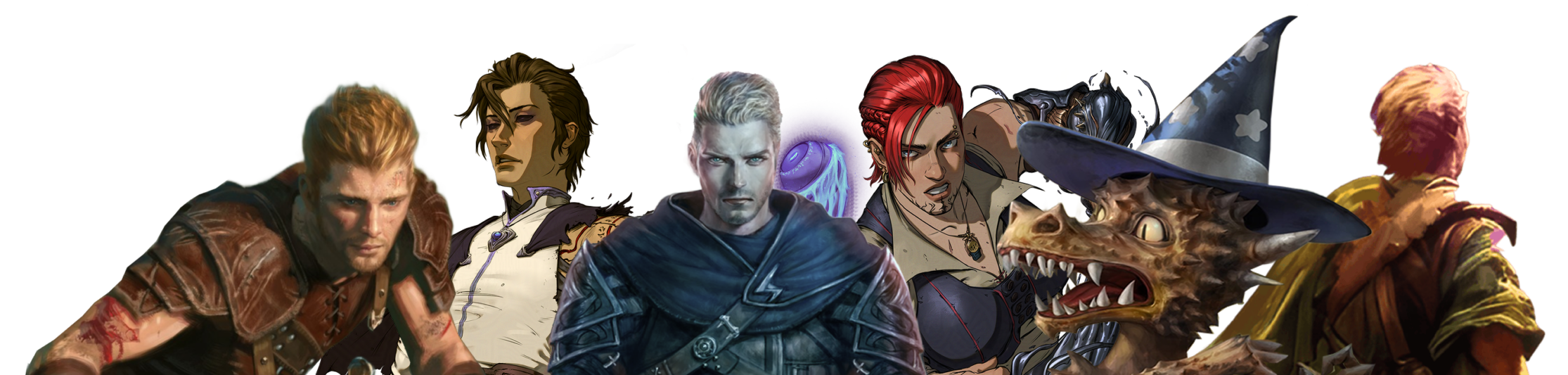
Before we get to everyone else’s books, if you want a space opera to dive into right now, I’d humbly point you toward my own. Starbreaker is my epic space-fantasy series: galaxy-spanning stakes, a cast you’ll actually care about, and the kind of sweeping adventure this whole genre is built on. It’s the clearest example of everything I love about space opera, written by yours truly.
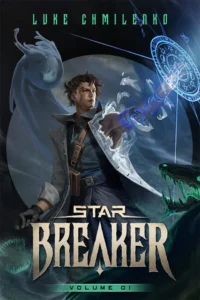
Starbreaker
A chosen one, an impossible evil, a journey to defy fate.
Sylvas Vail is a big fish in a small pond, the most powerful mage on his planet. But when the doors to the cosmos come crashing open and all the untold wonders and terrors of the universe come pouring in, he is left with only two options: ascend or die.
Buy It on AmazonSpace Opera Picks
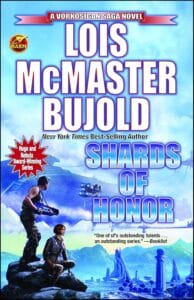
The Vorkosigan Saga
by Lois McMaster Bujold
If you’ve never met Miles Vorkosigan, you are in for an absolute treat. Bujold created one of the most compelling protagonists in all of science fiction, a physically disabled nobleman from a militaristic society who compensates for every disadvantage with sheer audacity, wit, and a brain that never stops scheming. The series spans decades of his life and covers everything from political intrigue to espionage to full-scale fleet combat, all while keeping his deeply personal character arc at the center. If you’re looking for a true to its heart Space Opera, this one is it.
Buy It on Amazon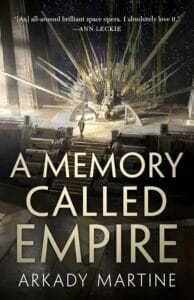
A Memory Called Empire
by Arkady Martine
For those who love their space opera with a heavy dose of political intrigue and questions about identity, culture, and colonialism, this duology is outstanding. Martine builds a fascinating empire that’s as seductive as it is horrifying, and the protagonist’s journey through its heart is as much about who she is becoming as it is about the conspiracy she’s trying to unravel.
Buy It on Amazon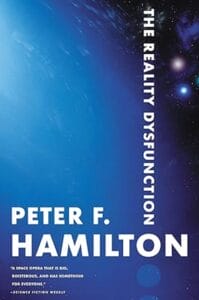
The Reality Dysfunction
by Peter F. Hamilton
Hamilton does big. Really big. The Night’s Dawn Trilogy is one of the most ambitious space opera series ever attempted, with a cast of characters scattered across dozens of worlds, multiple alien species, and a central conflict that blends science fiction with something that borders on cosmic horror. It’s dense, it’s sprawling, and if you make it to the end you’ll be rewarded with one of the best conclusions that I’ve ever read.
Buy It on Amazon
Military Sci-Fi Picks
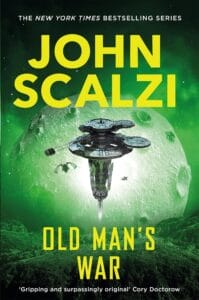
Old Man’s War
by John Scalzi
Scalzi takes the classic premise of elderly recruits being given young bodies to fight an interstellar war and turns it into something that’s simultaneously fun, thoughtful, and surprisingly moving. The military structure is well realized, the combat is visceral, and the technology shown within is among my favorite in the genre. I would recommend this book as one of the best entry points into military sci-fi for readers who are coming from other genres.
Buy It on Amazon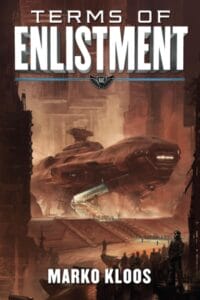
Terms of Enlistment
by Marko Kloos
If you want military sci-fi that feels grounded and real despite being set centuries in the future, this is your series, this I’d highly recommend this one. In this series we follow Andrew Grayson from a desperate enlistment driven by poverty through a military career that takes him from Earth to the stars. The combat is among the grittiest I’ve ever read, the stakes that Andrew has to endure are deeply personal, and the world building is perfectly detailed without ever feeling like things slow down.
Buy It on Amazon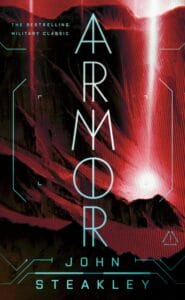
Armor
by John Steakley
This one is a standalone rather than a series, but it’s too good to leave off any military sci-fi list. Armor tells the story of a soldier fighting an endless war against alien insects on a hostile world, and it does so with a raw emotional intensity that stays with you long after you finish it. It’s one of the genre’s great explorations of what combat does to the human soul, and it deserves far more recognition than it gets.
Buy It on AmazonEpic Sci-Fi Picks
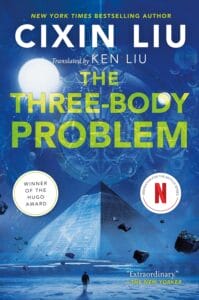
The Three-Body Problem
by Liu Cixin
If you haven’t read this one yet, it’s time. Liu Cixin’s Remembrance of Earth’s Past trilogy starts with a question about first contact and spirals out into one of the most ambitious explorations of physics, civilization, and cosmic scale that science fiction has ever produced. The ideas here are staggering in their scope, and the trilogy’s willingness to push beyond comfortable human-centric narratives into something truly alien is what makes it stand apart from nearly everything else in the genre.
Buy It on Amazon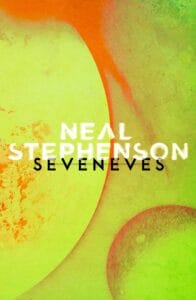
Seveneves
by Neal Stephenson
Another standalone that earns its place through sheer ambition. Stephenson opens with the moon exploding and then follows humanity’s desperate attempt to survive the extinction event that follows across thousands of years. The hard science is meticulous, the scale is genuinely epic, and the willingness to follow the consequences of the premise all the way to their logical conclusion is both thrilling and deeply unsettling. It’s not a quick read, but it’s a rewarding one.
Buy It on Amazon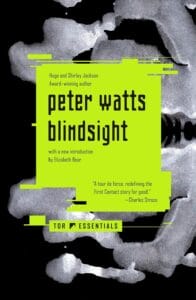
Blindsight
by Peter Watts
This one is for readers who want their epic sci-fi to challenge them on a fundamental level. Watts takes a first-contact scenario and uses it to ask genuinely uncomfortable questions about consciousness, intelligence, and whether self-awareness is actually an advantage or a cosmic accident. It’s dense, it’s unsettling, and it will change how you think about what it means to be a thinking being. Not for the faint of heart, but absolutely worth the effort.
Buy It on AmazonCONCLUSION
And That’s A Wrap!
So there you have it! Three genres that share a lot of common DNA but deliver fundamentally different reading experiences. Space opera gives you the drama and the wonder. Military sci-fi gives you the grit and the stakes. Epic sci-fi gives you the ideas and the scale. And the best science fiction out there often finds ways to blend all three into something that transcends any single label.
My advice? Don’t limit yourself to just one. If you’ve been living exclusively in space opera, dip your toes into military sci-fi and see how a different lens on the same kind of universe changes the story. If you’ve been grinding through hard military fiction, try some epic sci-fi and let the scope of it blow your mind. The genres are neighbors for a reason, and the best readers are the ones who wander freely between them.
In the meantime, stay tuned for the next entry in my genre series coming up soon. Until then, happy reading — see you all then!